

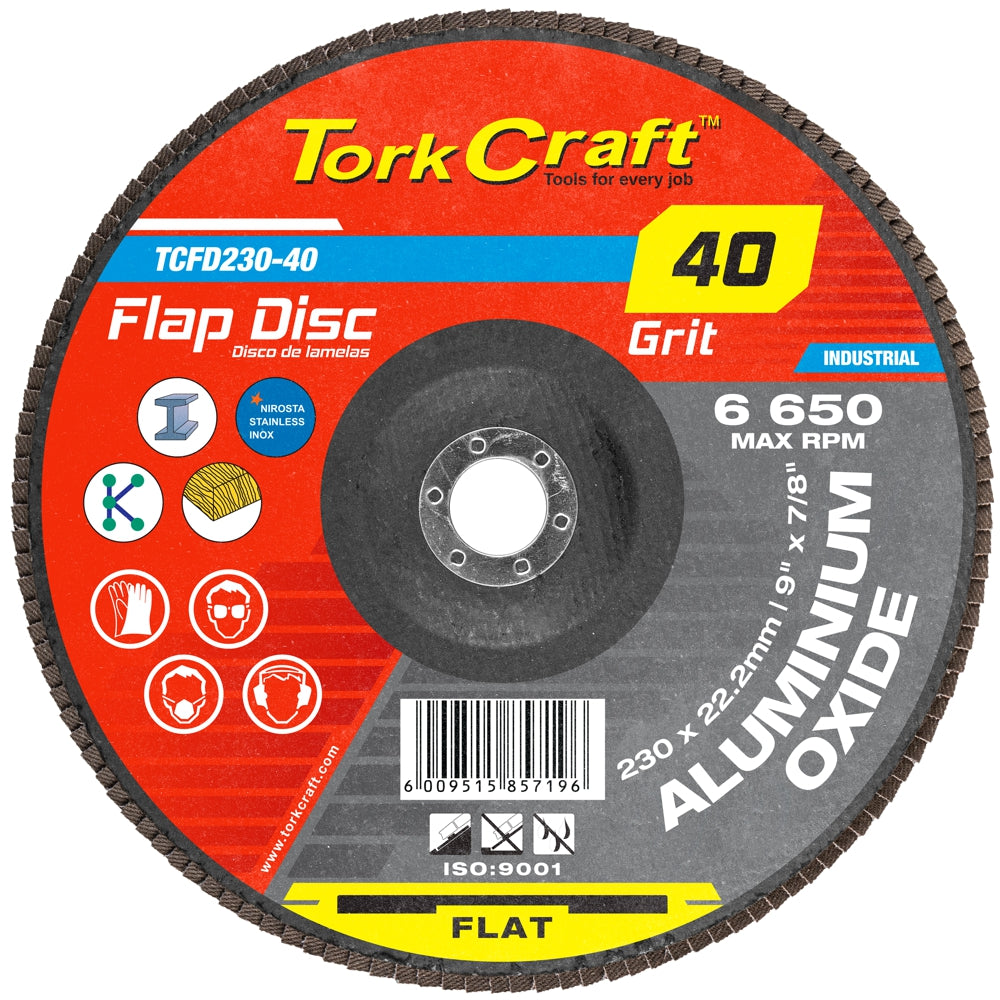
Tork Craft Flap Sanding Disc — 230 mm × 40 Grit (Aluminium Oxide)
Size: 230 mm diameter
This 230 mm Tork Craft flap sanding disc with 40-grit Aluminium Oxide abrasive is built for demanding workshops and site-use where fast material removal is needed. Its large format enables efficient stock removal on large surfaces, metal sheets, structural components and fabrication tasks.
Features
- 230 mm diameter — allows broad contact area and quicker coverage on large panels or components.
- 40-grit Aluminium Oxide abrasive — coarse grit designed for heavy stock removal, welding cleanup and aggressive surface prep.
- Flap-disc construction — abrasive flaps flex over surface contours and maintain better contact than rigid wheels, reducing digging or gouging.
- Trade-grade build from Tork Craft — designed for frequent use and high throughput.
Benefits
- High efficiency: 40-grit provides rapid material removal to accelerate preparation and finishing tasks.
- Large area productivity: The 230 mm size reduces passes and improves productivity on large surface jobs.
- Versatile use: Ideal for metal fabrication, structural steel, sheet-metal blanking, weld blending and heavy-duty prep.
Extra Information
- Ensure your grinder or machine supports a 230 mm disc and that the backing plate and rpm rating are suitable for this size.
- Use steady feed and avoid excessive pressure; pressing too hard reduces flap life and may damage the workpiece.
Pro Tip
- For large-sheet metal preparation, start with the 230 mm × 40-grit disc to remove major welds or surface imperfection, then switch to a finer disc (80- or 120-grit) for finishing.
Specifications
| Description | Spec |
|---|---|
| Brand | Tork Craft |
| Cat No. | TCFD230-40 |
| Disc Diameter | 230 mm |
| Abrasive Grit | 40 G (Aluminium Oxide) |
| Pack Quantity | 1 disc |
| Suitable Materials | Metal, Sheet Goods, Structural Components, Heavy Surface Preparation |
Safety
- Wear eye, ear and dust protection when using this disc—chips and particles can be thrown during heavy removal.
- Ensure guard is fitted and machine rpm does not exceed the disc’s rating.
- Allow the disc to spin up to full speed before contacting the surface; feed steadily and avoid side-pressure or twisting.
